7th June, 2026
·
5 min read
Cod up, Haddock down
When in the winter of 2024 I arrived at The Shetland Times’ offices — then a warehouse between a salmon slaughterhouse and the town dump — I was introduced to a rota of newsroom duties: cover an obscure council committee meeting, call up the coastguard if a helicopter flew past, or type up a story from the archives for an “On This Day” page.
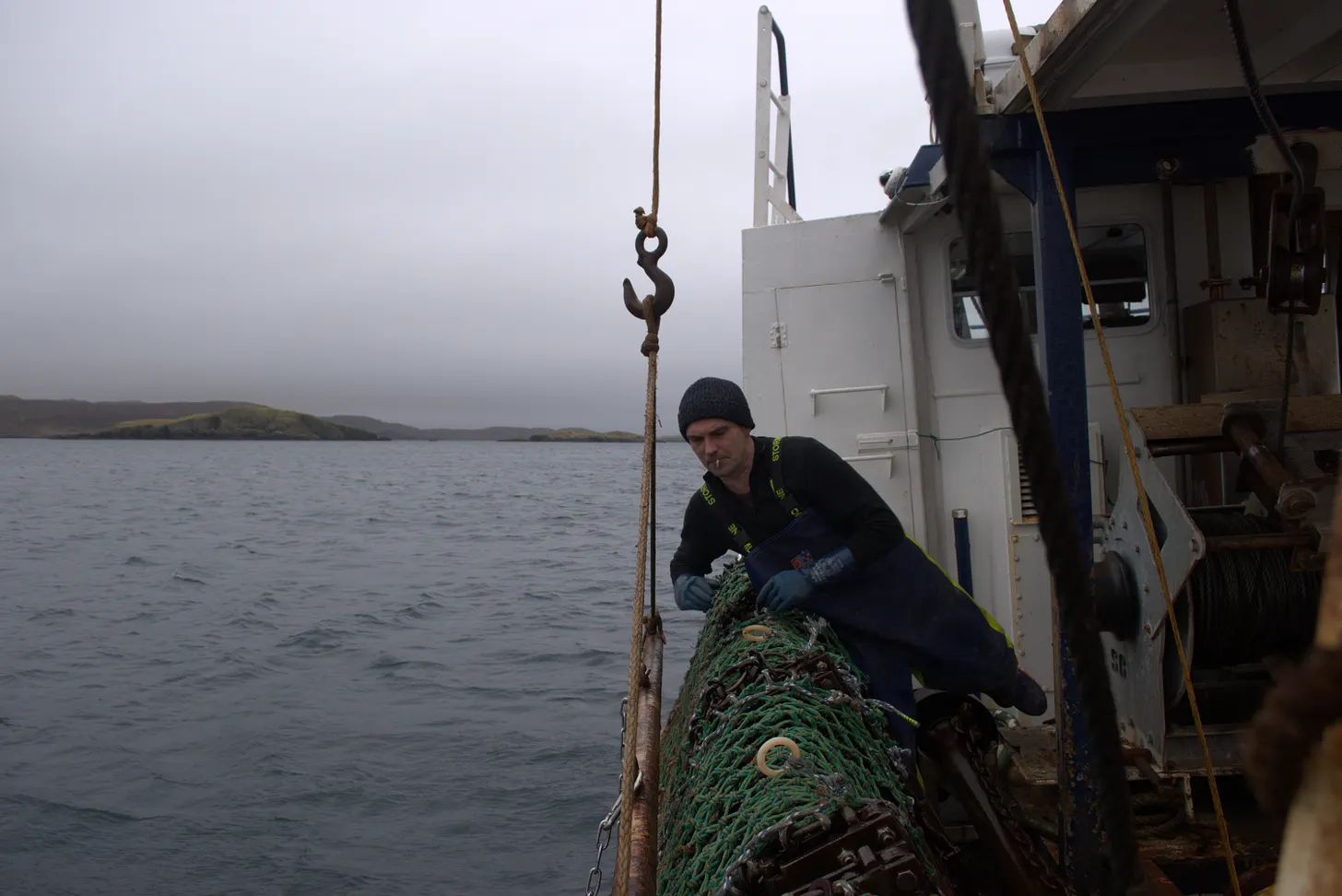
But the shortest of straws, it seemed at the time, was the Harbour Report. Each week the paper printed the prices of each fish species sold at auction in town, accompanied by a couple of hundred words on the comings and goings of other things that float. Unnoticed by readers (and, it increasingly seemed) my editors, cobbling together this collection of boat porn, market systems, and marine miscellanea soon became the highlight of my week.
Eventually I took the job off the rota, and spent each Wednesday afternoon getting the latest from the fish market. Often the Harbour Report was uneventful. Sometimes I got carried away. These are three of my favourites.
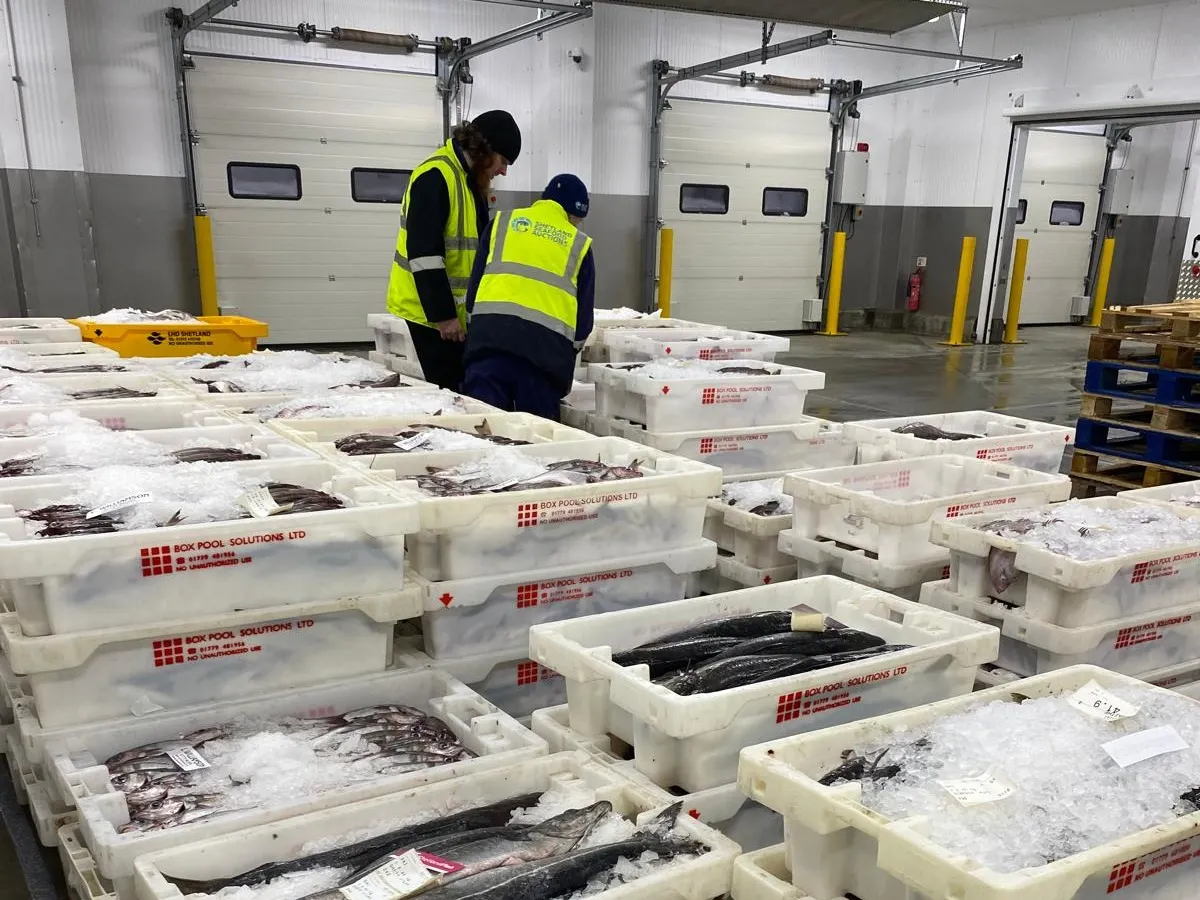
18th April 2025—Not long after the resurrection of Christ, John saw a vision of Jesus on the water bringing a holy mystery: “a great multitude of fishes”. This Holy Week two new fishy mysteries have had the harbour flummoxed.
A bird? A brill? University of the Highlands and Islands researchers have been scratching their heads over shadowy footage from a baited underwater camera. As juvenile fish dawdle in the background, a red flash of wing (or fin, or tentacle) sweeps past the lens attached to a thin, dark, darting creature.
The RSPB was consulted. A diving bird has been ruled out. A performative squid remains the next best bet, or a lost cuttlefish.
Meanwhile, word reached the fishmarket of a complete net registered to Lerwick’s Boy Frazer trawler discovered at 63.2401°N, 37.29°W — just short of the Greenlandic settlement of Kulusuk. The catch? Boy Frazer was decommissioned, and destroyed, in 2003.
“It’s a bizarre one,” said Brian Isbister, chief executive of the Shetland Fish Producers Organisation. “That’s a long, long way away.”
It is improbable, Isbister mused, that the entire net has been drifting across the Atlantic for two decades. More likely someone cribbed Boy Frazer’s electronic tag at a yard in Denmark and sold it on. “I don’t think there’s an absolute answer,” he said. “Maybe it’s passed through several hands.”
Otherwise near a thousand French tourists arrive with theRenaissance cruise on Tuesday, the blue whiting season is drawing to a close and the new Opportune is due in with her crew’s first catch since the old vessel sunk last year on Sunday.
Lerwick’s regular carousel of oil rig support boats included Armada 7801 in on Tuesday, undeterred by catching alight on her last visit earlier this year. The Armada fleet is designed to eventually sail without a crew, but had enough people aboard to put out the small galley fire before rescue crews arrived.
With Ocean Challenger and Valhalla out of action, Easter did not bring a miraculous multitude of fishes to market this year. Just one boat landed into Lerwick on Tuesday and Wednesday, none to Scalloway on Thursday.
Fish prices: …
11th September, 2025—“A whopper”, “monster”, “big”. All words used to describe the largest of fish landed into the pages of The Shetland Times over the years, the halibut.
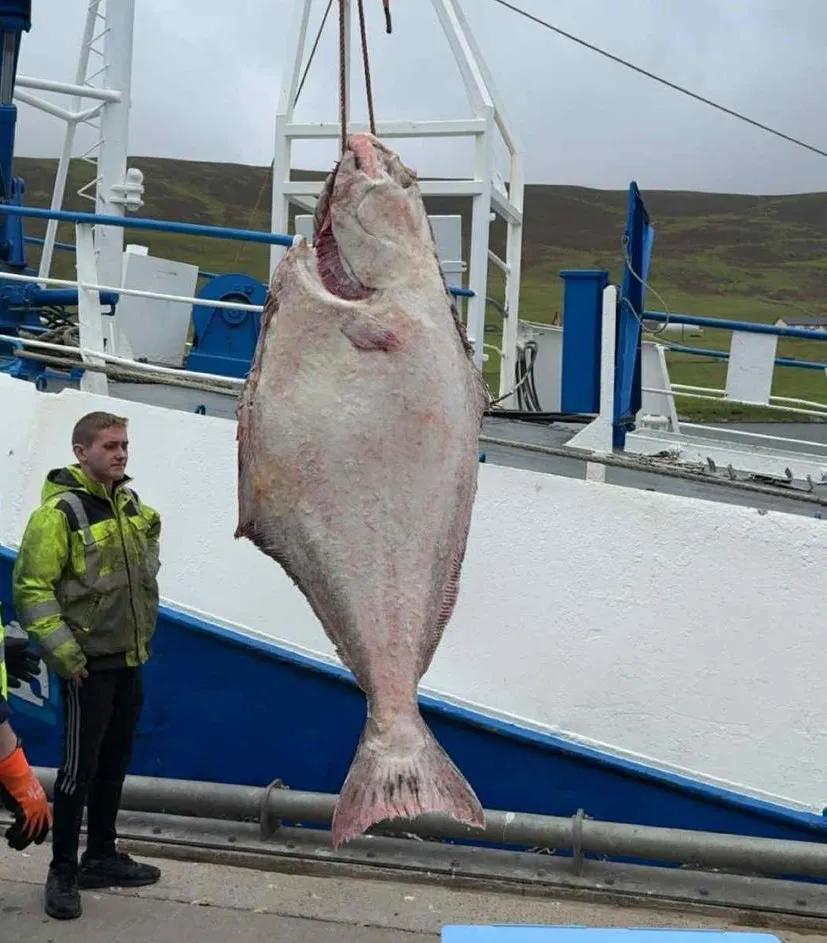
Last Thursday saw the fish market grind to a halt once again, when the Venture returned from Faroese waters with a halibut to match the largest ever landed into the isles, 127kg. It sold for £1092.20
“We’ve had to order a new, bigger set of digital scales,” said Gordon Drummond (68kg), senior operations manager at Shetland Seafood Auction. Daniel Lawson, executive officer with the fishermen’s association, was showing a political hopeful round the market in Lerwick when the big fish popped up over digital auction from Scalloway: “They must have found a halibut hole,” he thought.
Venture’s skipper, Jerry Pottinger, shared his excitement. “It’s fine to see,” he said. “The boys had to hold him down,” he added. “Just one flick of the tail and he’d have been over the side.”
Until the end of the First World War, Shetland’s biggest halibut weighed in at 111kg. Three years later a halibut was speared through the head and dragged ashore at Bressay, slightly heavier again. Then the record catches went quiet.
For weeks of 1984, J. R. Nicolson’s ‘Scalloway Notes’ [a regular section of The Shetland Times] recorded a “halibut saga” which toped out at a 114kg. Under a 1988 headline “Halibut was a whopper” a positively shrimpy 93kg fish is described as “among the biggest seen in Shetland for some time” (although famously reliable “older fishermen recalled catching halibut weighing up to 20 stone” or 127kg).
A red halibut? In June 1997 some scrupulous Shetland Times hack recorded a literally unbelievable 228kg halibut — but in the paper’s long-since defunct Norway Notes section, alongside (somewhat belated) news that it had been a snowy winter in Tromsø.
The real record: in October 1994, the Defiant landed a 127kg halibut. Or is it? “Look, we’re saying its 127, but it could be 127 and a half” confessed Drummond after weighing the Venture’s catch last week. “We’re not using a calibrated scale.”
Elsewhere a trigger-fish (more typically a tropical catch) turned up in a creel, the Mousa Boat ferried its annual cargo of sheep off the island for slaughter and Shetland Oyster began its harvest of the farmed shellfish for export. Strong winds brought visitors in to shelter: from fisheries patrol vessel Hirta to Norwegian tall ship,Sørlandet.
Fish prices: …
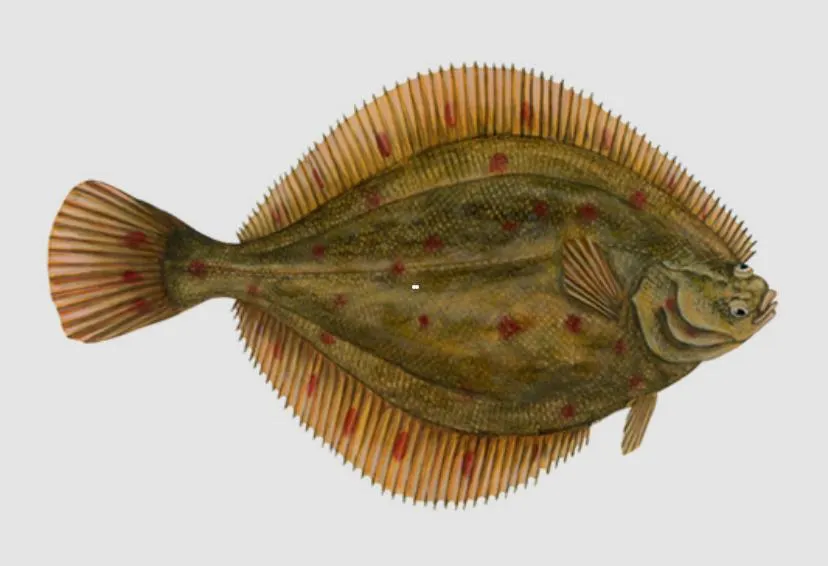
14th February, 2025—Love is in the air this Valentine’s for North Sea plaice, which have begun to spawn. Orange-spotted, flat and known to bury themselves under sand during the day, each female plaice cam pump out up to 100,000 eggs — equivalent to 265 for every gram they weigh. That is good news for male plaice, but bad news for plaice prices.
“Same as a wife giving birth they get a bit smaller,” said Clive Scott from LHD. “The underside of the fish goes very thin, so you just end up following the back of the fish for fillets. They’re no use under the belly.”
Cod are keeping their eggs a little longer, and have also kept their strong run to break a five year record again, having broken it already last week.
With most of the fleet enjoying their plaice in the sun, Lerwick’s market had a quieter mid-week. A slight easterly wind also sent more boats than usual landing into Scalloway after fishing off the more sheltered western coast.
Harbour remains the plaice to be, however, be for tax-shy Norwegian trawlers. At least 16 came in for “touch and go” stops — some bumping a berth, emailing notice of their arrival and setting off again without even tying up to score a tax break by qualifying for an international voyage.
Others stay a little longer to refuel while their crews top up on “lager and Quality Street,” according to port controller Ryan Leith. “It’s all they ever seem to want.”
Half a dozen other visitors found a plaice in port. Seagull,Transcend and Beryl all sailed in from Banff, alongside French-flagged visitors Andre Leduc, Otter Bank andBressay Bank.
Solo skipper Frode Lauvstad took advantage of the easterly to sail in on Thursday from Ikorness, a village 140 miles north of Bergen. He was at sea on Ingebord Mevind, a 39-foot yacht, for roughly 48 hours and comes to Shetland two or three times a year because he enjoys the relaxing atmosphere in Lerwick.
“It’s a quiet place,” he explained.
Fish prices: brill £9.10-14.10; catfish £1.81-3.09; cod £3-7.56; gurnard £1.21-1.47; haddock £1.10-4.61; haddock round 54p-£1.39; hake 81p-£9.22; halibut £9.90-20.60, John Dory £2.40-11.20; lemon sole £1.49-16.80; ling £1.90-2.80; lythe £2.91-5.34; megrims £1.40-16.84; monkfish £2.37-5.30; plaice 50p-£5.15; roes £5.81-7.76; saithe 92p-£2.51; skate 68p-£2.41; squid £1.07-4.96; turbot £11.40-24.40; tusk 95p-£1.89; whiting 89p-£3.35; whiting round 63p-£1.56; witches £2.01-5.82.
Related articles
- Shetland Food Month
01 Jun, 2026
Can you survive a month in Shetland eating only food grown or reared on island?